Pain changes everything. A dog who used to bound up the stairs now hesitates at the bottom. A cat who once curled in your lap stops jumping to her favorite spot. These quiet shifts are easy to miss or dismiss as "just getting older," but they are often the first signs that your pet is hurting.
At The Animal Doctors of Orange County, we take pain seriously at every stage of life. Whether your pet is recovering from surgery, managing a chronic condition like arthritis, healing from an injury, or navigating the challenges of cancer or end-of-life care, we build individualized pain management plans that draw from the full spectrum of modern veterinary medicine — combining pharmaceutical options with integrative therapies to address pain from multiple angles at once.
Osteoarthritis: The Most Common Pain Condition We See in Senior Pets
Most affected pets are never treated for it — because slowing down gets mistaken for "just getting older."
Chronic pain in senior pets is one of the most underdiagnosed conditions in veterinary medicine. Most owners never see obvious limping — they see a pet who's a little slower, a little less playful, a little more reluctant to jump. That's why we screen for it proactively at senior wellness visits, rather than waiting for it to become obvious.
Recognizing Pain in Dogs and Cats
Pets cannot tell us when they hurt, and unlike humans, they rarely cry out except in the most acute situations. More often, pain in dogs and cats looks like this:
Reluctance to climb stairs, jump, or rise from rest
Decreased activity or willingness to exercise
Hunching, guarding a limb, or a tucked tail
Changes in grooming habits
Reduced appetite
Irritability, withdrawal, or uncharacteristic aggression
Licking, chewing, or biting at a specific area
Panting at rest (dogs)
Vocalizing when touched or moved
Muscle loss over the hips and spine
Many of these signs are subtle and develop gradually, which is why they're so easy to attribute to normal aging. If you're noticing any of these changes, the right response isn't to wait and see — pain that goes unaddressed doesn't stay the same. It progresses, limits mobility, and significantly reduces quality of life.
Types of Pain We Treat
Not all pain is the same, and understanding the type of pain your pet is experiencing helps us choose the most effective combination of treatments.
Acute Pain
Develops suddenly from injury, surgery, dental disease, or infection. Typically short-lived when properly treated. Left untreated, it can transition into chronic pain through central sensitization.
Chronic Pain
Persists over weeks, months, or years — most commonly osteoarthritis, IVDD, hip dysplasia, degenerative joint disease, and dental disease. See the OA statistics above.
Neuropathic Pain
Stems from nervous system damage or dysfunction rather than tissue injury. Common after spinal surgery, with degenerative myelopathy, or with cancers affecting nerve tissue.
Cancer-Associated Pain
Affects pets at all stages of cancer, from the tumor itself and from treatments like surgery or chemotherapy. Palliative management is central to compassionate cancer care.
Pharmaceutical Pain Management
NSAIDs (Non-Steroidal Anti-Inflammatory Drugs)
NSAIDs are the cornerstone of pain management for most dogs and many cats. They work by reducing inflammation at the source, making them particularly effective for osteoarthritis, post-surgical pain, dental pain, and other conditions driven by inflammatory processes.
Commonly used veterinary NSAIDs include carprofen, meloxicam, deracoxib, and grapiprant — specifically formulated for pets. Human NSAIDs like ibuprofen and naproxen are never appropriate for dogs or cats and can cause life-threatening gastrointestinal and kidney damage.
Because long-term NSAID use can affect liver and kidney function, we monitor pets on chronic NSAID therapy with regular bloodwork — the same way a physician monitors patients on long-term human medications. The 2022 AAHA Pain Management Guidelines emphasize NSAIDs as the most effective first-line oral analgesic option for dogs and cats with inflammatory pain.

Opioids and Opioid-Like Medications
For moderate to severe pain — particularly post-surgical pain, acute injury, or advanced cancer pain — opioids provide relief other medications can't match, binding to pain receptors in the brain and spinal cord. They're used primarily in the hospital setting or for short-term at-home pain management under close supervision. Common options include tramadol, buprenorphine, and hydromorphone.

Gabapentin and Neuropathic Pain Medications
Gabapentin, originally developed for seizure management, has become an important tool for neuropathic and chronic pain. It reduces abnormal pain signaling and is often used alongside NSAIDs for a multimodal approach. It's also commonly used to manage anxiety around veterinary visits.
Muscle Relaxants and Adjunctive Medications
For pets with muscle spasm, spinal pain, or significant muscle tension, muscle relaxants like methocarbamol may be added to the plan. Other adjunctive medications, including amantadine, may address central sensitization in chronic pain patients.
Anti-NGF Monoclonal Antibody Therapy: Librela & Solensia
One of the newest categories of osteoarthritis pain relief works completely differently from NSAIDs. Instead of reducing inflammation, these injectable monoclonal antibodies target and neutralize nerve growth factor (NGF) — a protein that's elevated in arthritic joints and drives pain signaling to the brain. Because they work through a different mechanism than NSAIDs, they're an option for pets who can't tolerate NSAIDs long-term, or as an additional layer of relief alongside other therapies.
Librela (bedinvetmab)
- Monthly subcutaneous injection, dosed by weight
- Blocks NGF pain signaling rather than reducing inflammation
- Most common side effects: urinary tract infections, skin infections/dermatitis
- Not for breeding, pregnant, or lactating dogs
Solensia (frunevetmab)
- Monthly subcutaneous injection, dosed by weight
- Same anti-NGF approach, developed specifically for cats
- Most common side effects: vomiting, diarrhea, dermatitis/hair loss
- Not established safe with concurrent NSAID use; not for cats under 1 year, pregnant/nursing cats, or those with neurologic disease
A note on monitoring: Because Librela is still relatively new, regulators have been closely tracking real-world safety data. A February 2026 review by the UK Veterinary Medicines Directorate led to updated label guidance: if a dog develops new or worsening joint swelling or pain after starting Librela, further diagnostics and a case-by-case decision about continuing treatment are recommended. We monitor every patient on Librela closely and will talk through whether it's the right fit for your dog's specific situation — this isn't a decision we make without a full conversation with you.
The Multimodal Approach: Modern veterinary pain management rarely relies on a single drug. Combining medications that work through different mechanisms — an NSAID addressing inflammation, gabapentin addressing nerve sensitization, a short-term opioid for breakthrough pain — achieves better pain control at lower individual doses, reducing the risk of side effects from any one medication. This is multimodal analgesia, and it's the current standard of care per AAHA guidelines.
Integrative and Alternative Pain Therapies
Pharmaceutical pain management is powerful, but it works even better when combined with integrative therapies that address pain through entirely different mechanisms.
Cold Laser Therapy (Photobiomodulation)
One of the most evidence-supported integrative pain treatments available today. Specific wavelengths of light penetrate tissue and stimulate cellular activity — increasing ATP production, promoting blood flow, reducing inflammation, and triggering natural endorphin release. No needles, drugs, sedation, or shaving required. Sessions typically run 15–30 minutes.
Osteoarthritis & degenerative joint disease
Post-surgical recovery & incision healing
Intervertebral disc disease (IVDD)
Soft tissue injuries, sprains, strains
Chronic wound management
Inflammatory ear & skin conditions
Neuropathic pain & nerve regeneration
Acupuncture
Precise placement of fine sterile needles at specific points to stimulate nerves, increase local blood flow, and trigger natural pain-modulating substances including endorphins and serotonin. Particularly valuable for pets who can't tolerate certain medications, who need a drug-free option, or who haven't achieved adequate control through pharmaceuticals alone.
Chronic osteoarthritis
Spinal pain & IVDD
Hip dysplasia
Muscle pain & tension
Post-surgical recovery
Neurological conditions
Palliative & cancer-associated pain
Anxiety that amplifies pain perception
Veterinary Chiropractic Care
Addresses misalignments of the vertebrae and joints that restrict normal movement, compress nerves, and contribute to pain — relieving pain, improving flexibility and range of motion, and restoring normal gait patterns. Adjustments are gentle, typically well-tolerated, and often produce visible improvement after just a few sessions.
Spinal pain, stiffness, restricted motion
Intervertebral disc disease
Hip & elbow dysplasia
Post-surgical rehabilitation
Athletic/working dog performance issues
Gait abnormalities
Chronic neck or back pain
Why Integrative Therapies Work Best in Combination: cold laser reduces inflammation and promotes cellular healing, acupuncture modulates pain signals and triggers endorphin release, and chiropractic restores mechanical alignment and nerve function. As one practitioner put it, "everything works better when used with something else that is decreasing pain and decreasing inflammation and helping the body heal in a way that's in tune with what the body wants to do."
Supplements: Supporting Pain Management From the Inside Out
Nutritional supplements play a meaningful supporting role in a comprehensive pain management plan, particularly for chronic conditions like osteoarthritis. At The Animal Doctors of Orange County, we trust and recommend products from Nutramax Laboratories Veterinary Sciences, the number one veterinarian-recommended supplement company in the country, with over 30 years of research-backed formulations.
Welactin (Omega-3 Fatty Acids)
Of all the supplements used in veterinary pain management, omega-3 fatty acids have the strongest and most consistent evidence base. Multiple independent, randomized, double-blind clinical trials have demonstrated that EPA and DHA supplementation meaningfully reduces the clinical signs of osteoarthritis in dogs, including improvements in pain scores, lameness, joint effusion, and weight bearing:
- A prospective, randomized, double-blind, placebo-controlled trial in 78 dogs found that daily EPA and DHA supplementation significantly shifted inflammatory fatty acid ratios and correlated with relief of clinical signs associated with osteoarthritis — ScienceDirect
- A randomized, double-blind controlled trial at two university veterinary clinics found that dietary fish oil omega-3 supplementation resulted in significant improvement in weight bearing in dogs with osteoarthritis — PubMed
- A systematic review of randomized clinical trials concluded that EPA and DHA supplementation shows therapeutic benefit in canine and feline osteoarthritis, among other conditions — PMC
These aren't Nutramax-funded studies — they're independent research. Welactin is our chosen delivery vehicle because it provides pharmaceutical-grade, concentrated EPA and DHA in a form dogs and cats readily accept.
Dasuquin Advanced With Eggshell Membrane (ESM)
For pets with more significant joint disease or active arthritis, we generally recommend Dasuquin Advanced with Eggshell Membrane — a veterinarian-exclusive formulation that goes well beyond standard glucosamine and chondroitin. Eggshell membrane naturally contains collagen, glucosamine, chondroitin sulfate, hyaluronic acid, and more than 200 proteins involved in joint structure and function, in a partially hydrolyzed, bioavailable form.
The practical advantage over standard Dasuquin is speed. Glucosamine and chondroitin require a four-to-six-week loading phase before meaningful levels build in joint tissue; eggshell membrane peptides support a faster response in joint comfort. A randomized placebo-controlled clinical trial in dogs with osteoarthritis found antalgic postures significantly decreased in the eggshell membrane treatment group.
Why Nutramax
The veterinary supplement market is largely unregulated, meaning quality and dosing can vary wildly between brands that look identical on the shelf. We recommend Nutramax because their formulations use proprietary, research-specific ingredient grades — FCHG49 glucosamine and TRH122 chondroitin, the exact specifications studied in published clinical trials. Every batch is manufactured in the United States and quality-tested to confirm it contains what the label says.
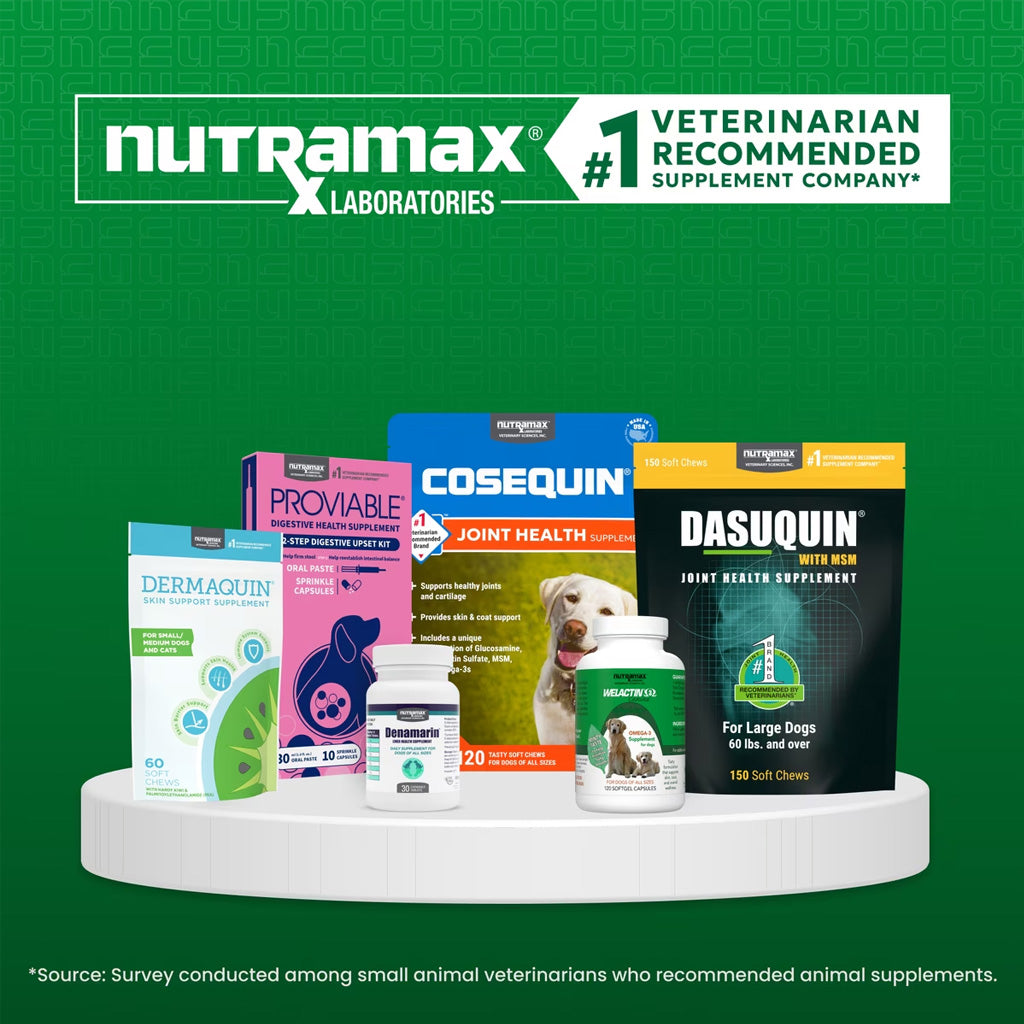
The Animal Doctors of Orange County has no sponsorship, referral arrangement, or incentive of any kind from Nutramax Laboratories or any other supplement company — just a supplement line we genuinely trust after years of clinical experience.
Pain Management Across Life Stages
Puppies & Kittens
Acute pain from injury, orthopedic conditions like osteochondrosis, and post-surgical recovery — with careful attention to age-appropriate dosing.
Adult Pets
Soft tissue injuries, dental disease, and early joint changes that may not yet produce obvious lameness. Addressing pain early produces significantly better long-term outcomes.
Senior Pets
Where the full integrative approach truly shines — a layered plan combining medications, regular laser therapy, acupuncture, joint supplements, and weight management.
End-of-Life & Palliative Care
Drawing from our full toolkit to ensure comfort, dignity, and quality of life are maintained for as long as possible.
Our Commitment to Your Pet's Comfort
Pain management is not a one-time conversation — it's an ongoing partnership between our team, you, and your pet. We reassess regularly, adjust plans as conditions evolve, and make sure you have the tools to recognize pain at home and communicate changes to us promptly.
If you suspect your pet is in pain, please don't wait. Pain caught early is pain treated more effectively.
This page is intended for educational purposes. For specific questions about your pet's pain management or to schedule an evaluation, please contact our team directly. Never administer human pain medications to pets without veterinary guidance.
The Animal Doctors of Orange County proudly serves Anaheim, Fullerton, Brea, Yorba Linda, Buena Park, La Mirada, Placentia, Orange, Tustin, Irvine, Huntington Beach, Fountain Valley, Mission Viejo, Lake Forest, and all surrounding Orange County communities.
Your Pet’s Health and Happiness Begin Here
Service FAQ
How do I know if my pet is in pain?
Pets often hide pain, but common signs include limping, reluctance to move, decreased appetite, or vocalizing when touched. Regular check-ups help in early detection and management of pain.
Is pain management necessary after surgery?
Yes, managing pain after surgery ensures your pet’s recovery is smooth and comfortable. Pain management helps reduce stress and promotes faster healing.
Are there any side effects of pain medications for pets?
Some pain medications may have side effects, such as stomach upset or drowsiness. Your veterinarian will monitor your pet to minimize risks and adjust the treatment as needed.
What are the common treatments for pet pain?
Treatments vary but may include anti-inflammatory drugs, pain relievers, physical therapy, or alternative treatments like acupuncture. Your veterinarian will recommend the best options for your pet.
Can pain management improve my senior pet’s quality of life?
Absolutely. Many older pets suffer from chronic pain due to arthritis or other conditions. Effective pain management can greatly enhance their mobility and overall well-being.
Can alternative therapies help with pain management?
Yes, therapies like acupuncture and laser treatments are gaining popularity in veterinary medicine. These can be used alongside traditional medications to improve pain relief.