
Dog deworming is an essential part of maintaining your pet's health and well-being. Intestinal parasites like roundworms, hookworms, whipworms, and tapeworms can cause diarrhea, vomiting, weight loss, and general poor condition, and some of these parasites are common enough that most dogs will be exposed to one at some point in their life. Regular deworming eliminates these parasites and keeps your dog's digestive system healthy.
The most effective approach isn't an occasional dose when something looks off, it's consistent, monthly prevention. Many of the monthly products used for heartworm prevention or combined flea and tick control also treat and control roundworms and hookworms as part of the same monthly dose, so keeping your dog current on those preventives is doing double duty as ongoing deworming.
Why Monthly Prevention Is the Best Deworming Strategy
The Companion Animal Parasite Council (CAPC) recommends year-round use of a broad-spectrum heartworm preventive with proven activity against roundworms and hookworms, the two intestinal parasites with the most zoonotic potential for people. Rather than treating for worms only after an infection is found, a monthly preventive keeps your dog protected continuously and catches new exposure before it becomes a heavier infestation.
If a monthly product isn't a realistic option for your dog, CAPC's fallback recommendation is deworming with a broad-spectrum product at least four times a year, but monthly is genuinely the better standard, and it's often something you're already doing if your dog is on year-round heartworm or flea and tick prevention (Sentinel Spectrum, Simparica Trio) . We can help make sure the specific product your dog is on actually covers intestinal parasites too, not every one does.
One product that fits this "2 in 1" approach well is Simparica Trio, a monthly chewable that covers heartworm prevention, flea and tick protection, and control of roundworms and hookworms in a single dose.
Ready to reorder Simparica Trio? Shop online through your location's pharmacy.
Common Intestinal Parasites in Dogs
- •Roundworms — one of the most common parasites in puppies, often passed from mother to pups. Also the parasite responsible for toxocariasis, a zoonotic infection in people.
- •Hookworms — small parasites that feed on blood in the intestine and can cause anemia, especially dangerous in puppies. Also zoonotic, capable of causing skin irritation in people.
- •Whipworms — live in the large intestine and can cause chronic, intermittent diarrhea that's sometimes hard to pin down without testing.
- •Tapeworms — usually picked up from swallowing an infected flea, which is one more reason consistent flea prevention matters.
What Do These Parasites Actually Look Like?
Real diagnostic microscope images, the same ones our lab looks for in a fecal exam.
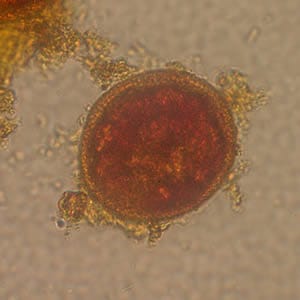
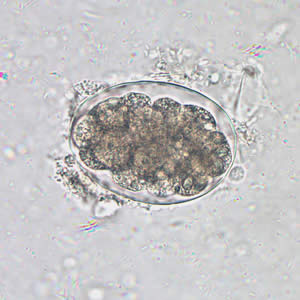
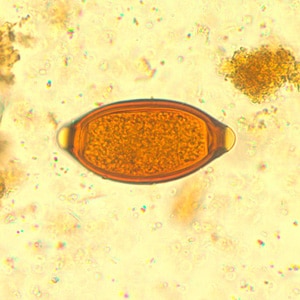
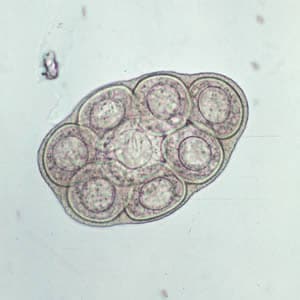
Roundworm (Toxocara) egg, shown at 400× magnification. Roundworms are the parasite responsible for zoonotic toxocariasis. Photo courtesy CDC/DPDx.
Images from the CDC's DPDx parasite diagnostic library, public domain and used with credit.
If you have young kids at home, this matters even more. Roundworm eggs shed in dog feces can cause toxocariasis in people, and the CDC specifically notes that young children are most at risk, largely because of hand-to-mouth contact after playing in contaminated dirt, grass, or sandboxes. Most infections are mild or symptom-free, but in rare cases the parasite can affect the eyes and cause vision damage, which is why it's taken seriously.
The CDC's own top prevention recommendation is exactly what this page is about: "Have a veterinarian test and treat your dogs or cats for worms." Beyond keeping your dog on monthly prevention, picking up waste promptly, washing hands after yard time, and teaching little ones not to eat dirt all help close the loop.

Deworming Schedule for Puppies & Adult Dogs
- •Puppies — dewormed every 2-4 weeks until 12 weeks old, then monthly through 6 months, since puppies are especially susceptible to parasitic infection. Learn more on our puppy care page.
- •Adult dogs — ideally covered by a monthly broad-spectrum heartworm or flea/tick preventive with dewormer activity; otherwise, deworming at least twice a year based on a fecal exam and your dog's individual risk.
A fecal exam through our lab testing services helps confirm which parasites, if any, are present and which medication is the right fit.
Our Orange County Locations
The Animal Doctors of Orange County offers dog deworming and parasite prevention at our Anaheim, Buena Park, and Mission Viejo locations, serving families throughout Fullerton, Cypress, La Palma, Garden Grove, Orange, Laguna Hills, Lake Forest, and Aliso Viejo. If you're not sure whether your dog's current preventive covers intestinal parasites, bring it up at your next visit, we're happy to check. 💛
Don't forget to follow us on social media: Facebook, Instagram.
Related Services: Dog Heartworm | Dog Fleas & Ticks | Dog Parasites | Puppy Care | Dog Lab Tests
Service FAQ
How often should I deworm my dog?
The frequency of deworming depends on your dog’s age, lifestyle, and risk of exposure to parasites. Puppies should be dewormed every 2-4 weeks until they are 12 weeks old, and then monthly until they are six months old. Adult dogs should be dewormed at least twice a year, but consult your veterinarian for a more personalized recommendation based on your pet’s specific needs.
Is it necessary to visit a veterinarian for dog deworming?
Yes, it is recommended to consult your veterinarian before administering any deworming medication. A fecal examination will help identify the specific parasites affecting your dog and ensure the appropriate medication is prescribed.
How can I prevent my dog from getting infected with parasites?
Prevention measures include regular deworming, maintaining a clean environment, and avoiding areas with high contamination risks, such as dog parks with poor hygiene. Additionally, prevent your dog from eating feces, as this can lead to parasitic infections.
Can dog deworming medication have side effects?
Dog deworming medications are generally safe, but some dogs may experience mild side effects such as vomiting, diarrhea, or loss of appetite. If your dog experiences severe or persistent side effects, contact your veterinarian immediately for guidance.
Can humans get infected with parasites from dogs?
Certain parasites, such as hookworms and roundworms, can be transmitted from dogs to humans. Regular deworming and proper hygiene can minimize the risk of transmission. Always wash your hands after handling your pet and dispose of pet waste properly.
Can dog deworming medication treat all types of parasites?
Different deworming medications target specific parasites. A fecal examination by your veterinarian will help identify the parasites affecting your dog and ensure the correct medication is prescribed. In some cases, a combination of medications may be necessary to treat multiple types of parasites.