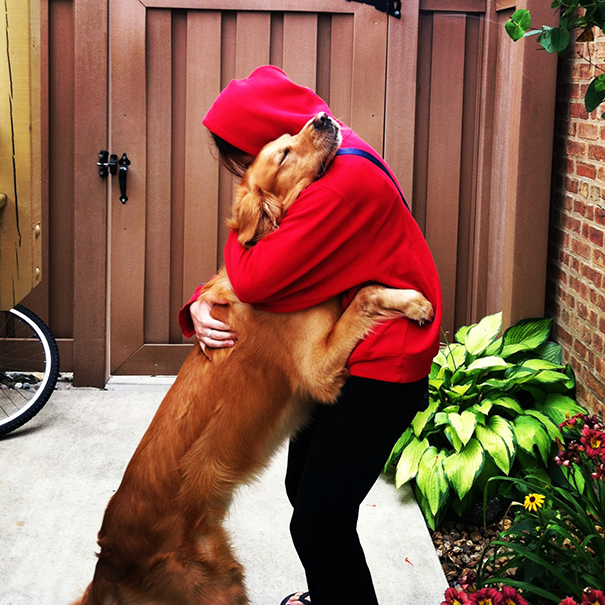
You've probably seen it happen. Your dog warms instantly to one visitor and gives another a wide, suspicious berth for no reason you can point to. It's a comforting idea, that our dogs are quietly reading the room and sorting the good people from the bad. But is it true? Can a dog actually tell when someone is kind, or when someone is lying?
As it turns out, this exact question has been studied in real animal-cognition labs, and the answer is genuinely fascinating: yes, dogs pick up on far more about human character than most people realize, though the science comes with some important and honest caveats. At The Animal Doctors of Orange County, we love digging into the research behind the pets we care for, so let's look at what scientists have actually found.
Dogs don't read minds, but they are remarkably good social observers, and they've had thousands of years of practice. Studies show that dogs stop trusting people who have misled them, and that dogs tend to avoid people they've watched treat their owner badly. So while your dog isn't running a lie-detector test, it is constantly gathering evidence about who is reliable and who isn't, and adjusting its behavior accordingly.
Dogs stop trusting people who mislead them
One of the most striking experiments on this comes from Kyoto University. Researchers led by Akiko Takaoka set up a simple test of trust using pointing, something dogs are famously good at following.
In the first round, a person pointed at a container that really did hide food, and the dogs happily followed the point and found the treat. Then the same person pointed at a container the dog knew was empty, deliberately misleading it. In the final round, that same person pointed again at a baited container, exactly as they had the first time.
This time, far fewer dogs bothered to follow. Having been fooled once, the dogs essentially decided this human's information couldn't be trusted, and stopped taking the cue. A follow-up showed the dogs would happily follow a brand-new person's pointing, which ruled out the idea that they were simply bored or tired. The researchers concluded that dogs "make inferences about the reliability of a human" and update their behavior based on whether a person's signals have proven honest. In plain terms: lie to a dog once, and it takes note.
Dogs watch how you treat their person
If detecting an unreliable pointer sounds impressive, this next finding is the one that really tugs at the heartstrings. A separate Kyoto University team, led by Hitomi Chijiiwa, tested whether dogs judge people based on how they treat their owner, even when the dog gets nothing out of it either way.
Fifty-four dogs each watched their owner struggle to open a container. In one group, a bystander stepped in and helped the owner. In another, a bystander was asked for help and actively refused, turning coldly away. A third, neutral group involved no clear request. Throughout each scene, a second, uninvolved person sat by. Afterward, both the actor and the neutral person offered the dog a treat at the same time.
When the bystander had helped, or in the neutral scenario, dogs picked their treat more or less at random. But when the dog had just watched someone snub its owner, it noticeably avoided that person and took the food from the neutral bystander instead. The dogs were making a social judgment that had no bearing on their own snack supply, they simply didn't want to accept kindness from someone who'd been unkind to their human. The researchers described this as evidence that dogs "avoid people who behave negatively to the owner," a form of social evaluation once thought to be uniquely human.
It's not just dogs, monkeys do it too
This kind of people-judging isn't a quirk of dogs alone. The same core research group ran a comparable study with capuchin monkeys, published in Nature Communications. The monkeys watched an actor either help or flatly refuse to help another person who was struggling to open a jar. Afterward, when both people offered the monkeys food, the monkeys were noticeably less willing to accept it from the unhelpful actor.
The fact that monkeys, dogs, and even human infants all show this same tendency to steer clear of the "mean" party suggests that watching third-party interactions and forming impressions of who's cooperative may be a deep, ancient feature of social animals, not a trick dogs simply learned from living alongside us.
Bred to read us: dogs have been studying humans for thousands of years
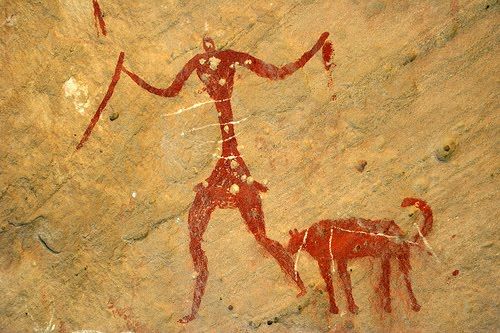
Part of why dogs are so good at this is that they've had an extraordinarily long time to practice. Dogs were domesticated from wolves at least 15,000 years ago, and by some estimates closer to 30,000 years or more, making them humanity's oldest animal companions. Across those millennia at our sides, dogs didn't just grow friendlier, they evolved to read us.
The evidence is right there in the pointing studies. Dogs are unusually gifted at following human gestures like pointing and eye gaze, better, in fact, than their own wolf ancestors and even our closest primate relatives, chimpanzees. That talent isn't something each dog laboriously learns from scratch; it appears to be partly built in by domestication itself. In other words, tens of thousands of years of evolving in step with humans have tuned dogs into expert people-watchers.
So when your dog seems to "just know" something about a person, it's drawing on an ancient inheritance. Every generation of dogs that was a little better at reading human intentions, at spotting kindness, cooperation, and reliability, was a little better equipped to thrive in our company. In a very real sense, your dog is the product of the longest continuous study of human behavior in history, and you are its latest subject.
The honest caveat: it isn't mind-reading
Here's where being well-researched matters, because the science isn't a tidy fairy tale. Not every study has found that animals judge people so neatly.
Researchers at the Wolf Science Center in Austria tested whether dogs and wolves would form "reputations" of generous versus selfish humans, both by watching and by direct experience. At the group level, neither the dogs nor the wolves reliably preferred the generous person. A handful of individual animals did seem to favor the generous partner, and the wolves paid closer attention to the generous human while watching, but the clean effect seen in earlier studies didn't fully hold up.
What does this tell us? Probably that reputation-building in animals is real but fragile, and highly sensitive to context. A dog may not bother forming strong opinions over a trivial food game in a lab, yet form them quickly in situations that genuinely matter to it. It's a good reminder that "dogs can sense a bad person" is closer to a tendency than an infallible superpower. Your dog is gathering evidence, not delivering courtroom verdicts.
What about cats?
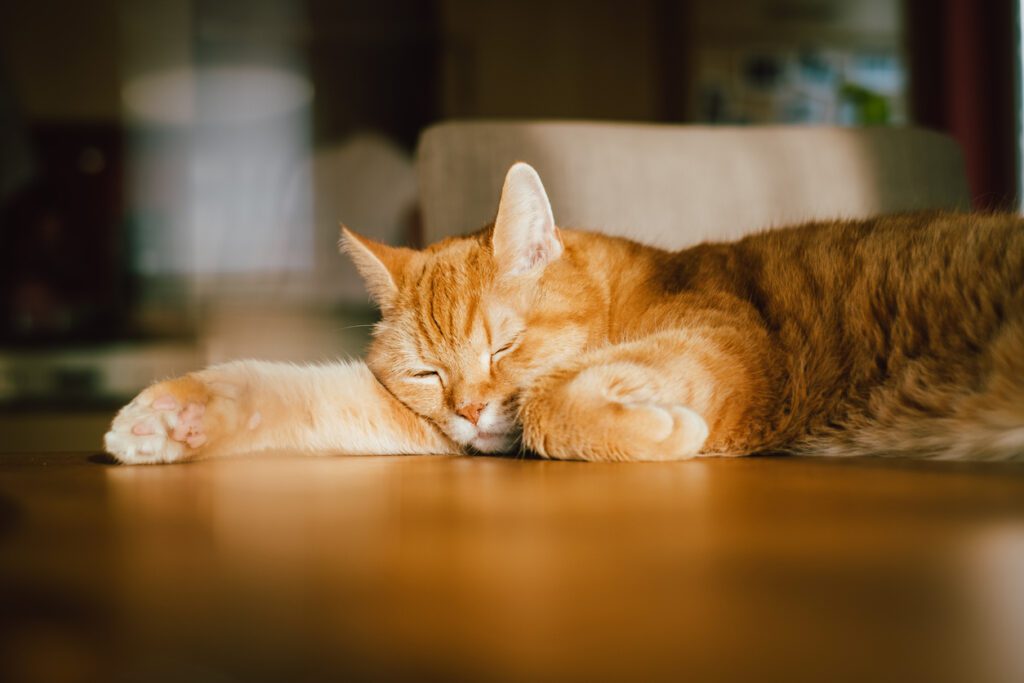
Fair question, especially for the cat lovers among us. When researchers ran a version of the "avoid the person who was mean to my owner" experiment with cats, the cats showed no such avoidance. They were perfectly willing to take a treat from someone who'd just snubbed their owner. This isn't proof that cats don't care, it may simply reflect that cats read and respond to human social situations differently than dogs, who have spent tens of thousands of years co-evolving as our working partners. If your cat seems gloriously indifferent to your social dramas, that's very much on brand.
So how do dogs actually read us?
Dogs don't have a sixth sense, they have extraordinary ordinary senses, plus a lifetime, and an evolutionary history, of studying us. They notice things we barely register:
- Body language and facial expressions. Dogs are experts at reading tension, posture, and even subtle shifts in our expressions, and they cross-reference our faces with our tone of voice.
- Scent. A dog's sense of smell is orders of magnitude sharper than ours, and research suggests dogs can even detect the chemical signature of human stress on our breath and sweat.
- Tone and consistency. Dogs track patterns. Someone whose warm words don't match their cold behavior sends mixed signals a dog notices, much like the "unreliable pointer" in the study above.
- How you treat their people. As the research shows, dogs are watching your interactions, not just your treats.
Put those abilities together, sharpened over thousands of years of domestication, and you get an animal that's constantly, quietly forming impressions, no mind-reading required.
What this means for you and your dog
The takeaway isn't that your dog is secretly appraising your soul. It's that trust with a dog is earned through consistency, gentleness, and reliability, exactly the qualities these studies reward. Dogs believe what you show them over time.
It's also worth knowing that a sudden shift in how your dog trusts or reacts to people can occasionally signal something medical rather than emotional. New fearfulness, irritability, or wariness can stem from pain, declining vision or hearing, or anxiety. If your dog's temperament changes noticeably, it's worth raising at a wellness exam, and our team can help you sort behavior from biology. For dogs working through fear or reactivity, our behavior and training support is here to help, and building good social habits early is one of the best gifts you can give a puppy.
Frequently asked questions
Can dogs really tell when someone is lying?
Sort of. Research from Kyoto University found that dogs stop following the cues of a person who has previously misled them, showing they judge human reliability. It's not lie-detection in the human sense, but dogs do notice when someone's signals prove untrustworthy.
Do dogs know if someone is a good or bad person?
Dogs are excellent at reading behavior and forming impressions, especially about how someone treats their owner. Studies show dogs tend to avoid people who behave negatively toward their humans, though this is a general tendency rather than a guaranteed judgment.
Why does my dog dislike certain people?
It could be body language, scent, tone of voice, a past association, or simply an unfamiliar energy. Dogs also pick up on how a person interacts with you. If the aversion is sudden or extreme, a vet visit can help rule out pain or anxiety.
Can cats judge people the same way dogs do?
Current research suggests not in the same way. In one study, cats showed no avoidance of people who had been unkind to their owners, hinting that cats process human social behavior differently than dogs.
Is my dog's trust something I can build?
Absolutely. Consistency, calm handling, gentle routines, and positive experiences all strengthen your dog's trust, which is exactly what the science on reliability and social evaluation would predict.
The bottom line
Your dog may not be a furry lie detector, but it is a gifted observer of human behavior, tracking who's reliable, who's kind to you, and who sends signals that don't add up, an instinct honed over tens of thousands of years at our side. That's backed by real science, and it deserves a little awe.
At The Animal Doctors of Orange County, your pet is our priority, from their health to their happiness to the remarkable little mind behind those trusting eyes. If you have questions about your dog's behavior or wellbeing, our staff would love to talk with you.
References and further reading
- Takaoka et al., Animal Cognition (2015) — Do dogs follow behavioral cues from an unreliable human?
- Chijiiwa et al., Animal Behaviour (2015) — Dogs avoid people who behave negatively to their owner (Kyoto University summary)
- Anderson et al., Nature Communications (2013) — Third-party social evaluation of humans by monkeys
- Jim et al., PLOS ONE (2022) — Wolves and dogs fail to form reputations of humans after indirect and direct experience
- Chijiiwa et al., Animal Behavior and Cognition (2021) — Cats show no avoidance of people who behave negatively to their owner