

Have you noticed more dogs in grocery stores, restaurants, and airport terminals lately? Have you thought about bringing your own pet along as a comfort during travel or everyday errands? You are not alone. Over the past decade, emotional support animals (ESAs) have gone from a little-known accommodation to a regular topic in the news, on social media, and in the aisles of local businesses.
With that growth has come a lot of confusion. Are emotional support animals the same as service animals? Where is each one legally allowed to go? Why does it matter if someone who doesn't truly need their pet with them registers Fluffy as an ESA so she can ride along on a flight or tag along to the mall?
At The Animal Doctors of Orange County, we love seeing pets and people spend time together. We also want to make sure every outing is safe, legal, and low-stress for your pet, for other animals, and for the people around you. Let's start by clearing up the differences between the animals that fall under these labels.
Emotional Support Animals
An emotional support animal is a pet whose companionship helps ease the symptoms of a mental or emotional health condition. Almost any common domestic animal that meets typical pet standards can serve as an ESA. In other words, the animal should be housetrained, understand basic commands, and be safe and calm around other people and pets. Dogs and cats are by far the most common, but rabbits, birds, and other small companion animals can qualify as well.

Here is the key point: an ESA is not defined by training. It is defined by need. To be recognized as a legitimate emotional support animal, a licensed mental health professional or medical provider must determine that the animal's presence provides meaningful relief for a diagnosed condition, and they document that in what is commonly called an ESA letter. There are no official training requirements for emotional support animals, and most have never received any formal training at all.
Where ESAs are protected: The main legal protection for emotional support animals in the United States comes from the federal Fair Housing Act. With proper documentation, a landlord generally must make a reasonable accommodation for an ESA, even in "no pets" housing, and usually cannot charge pet rent or a pet deposit for the animal.
Where ESAs are not protected: This is where many people are surprised. Emotional support animals are not covered by the Americans with Disabilities Act (ADA). That means stores, restaurants, hotels, medical offices, and other public places are not required to admit them. And as of 2021, the U.S. Department of Transportation updated its rules under the Air Carrier Access Act so that airlines are no longer required to treat ESAs as service animals. Today, virtually every major U.S. airline treats an emotional support animal as a regular pet, which means standard pet fees, carrier requirements, and size limits apply.
The problem of "fake" support animals
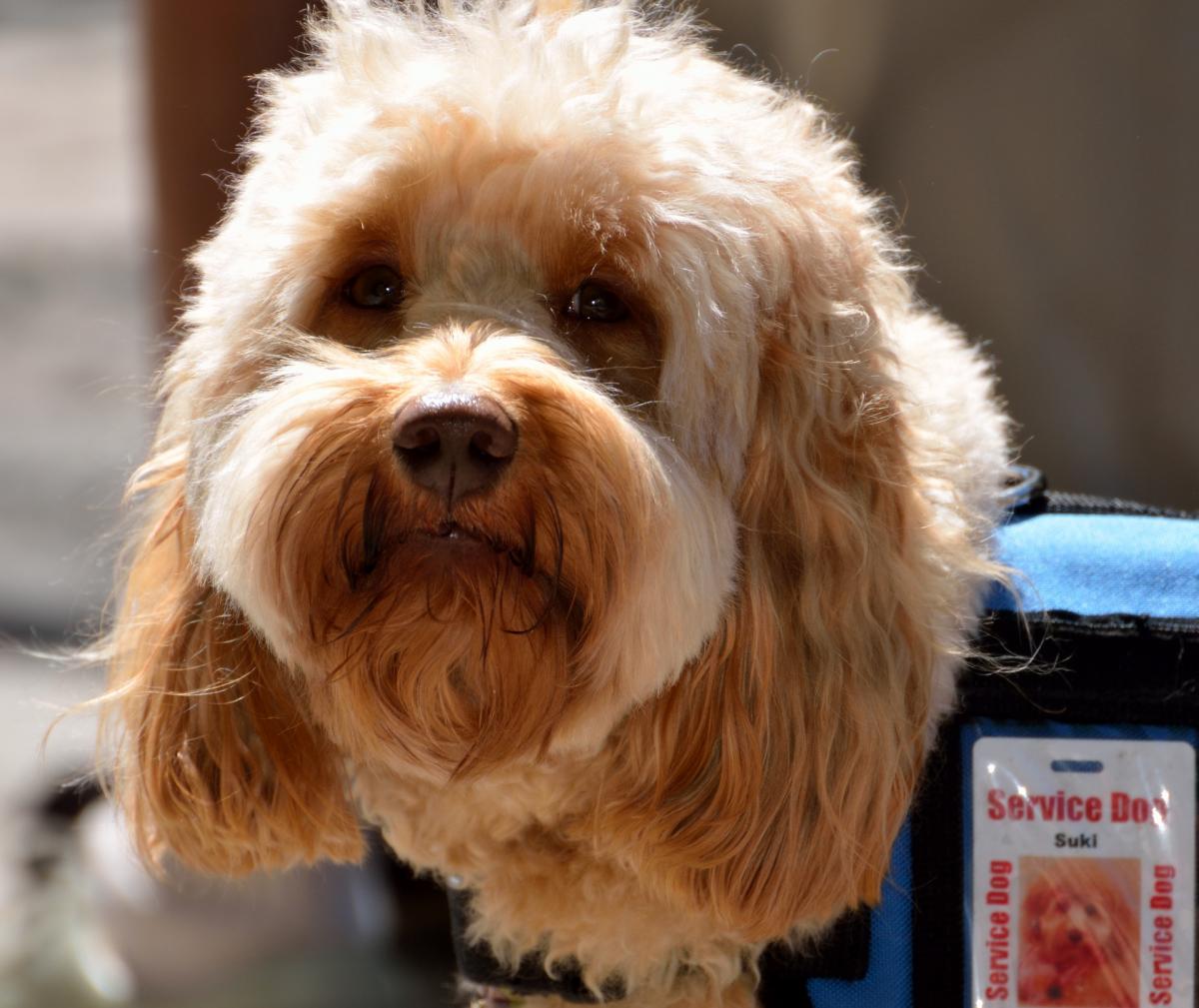
The number of illegitimate support animals, meaning pets with no training and no documented need from a mental health professional, has risen sharply. Dozens of websites will sell you an official-looking certificate, an ID card, and a vest for a small fee, often within minutes and without any real evaluation. These products carry no legal weight. There is no official national registry for service animals or emotional support animals, and a vest or card does not grant any access rights on its own.
California has taken notice. Under Assembly Bill 468, which took effect in 2022, any business that sells ESA products or documentation must provide a written notice stating that an emotional support animal is not a service animal and does not have the same legal rights. The same law requires that a health care provider have an established relationship with a client for at least 30 days before issuing an ESA letter, and the provider must hold an active California license. Separately, California Penal Code section 365.7 makes it a misdemeanor to knowingly and fraudulently represent yourself as the owner or trainer of a service dog. Penalties can include a fine of up to $1,000 and up to six months in county jail. Many other states have passed similar laws, as this overview of states cracking down on fake service dogs explains.
Service Animals
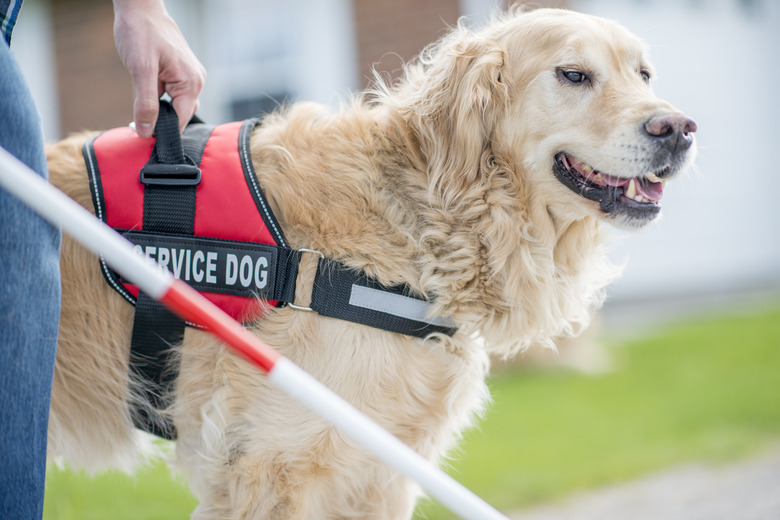
The Americans with Disabilities Act defines service animals as "dogs that are individually trained to do work or perform tasks for people with disabilities." (The ADA also includes a narrow provision for trained miniature horses, but in practice nearly all service animals are dogs.) The task must be directly related to the person's disability. Examples include guiding a person who is blind, alerting a person who is deaf, pulling a wheelchair, retrieving dropped items, alerting to an oncoming seizure, detecting dangerous changes in blood sugar, and reminding a person to take medication.
Service dogs are typically bred and selected for calm temperaments, adaptability, and the ability to learn complex tasks. They go through a rigorous training process that often takes 18 months to two years, and a significant number of candidates do not pass the final evaluations. A fully trained service dog is expected to remain focused and under control in crowded, noisy, or unpredictable environments.
Because they are working animals rather than pets, service dogs are allowed to accompany their handlers anywhere the public is normally permitted to go, including restaurants, stores, hospitals, hotels, and airplane cabins. A business may only ask a service dog to leave if the dog is out of control and the handler does not take effective action, or if the dog is not housebroken.
When it is not obvious what a dog does, staff are legally allowed to ask only two questions: Is the dog a service animal required because of a disability? And what work or task has the dog been trained to perform? They cannot ask about the person's disability, request medical documentation, ask for a demonstration, or require any certification or ID. These limits exist to protect the privacy and dignity of people with disabilities, but they also make it very easy for someone to bring an untrained pet into a public space. Businesses and their employees are often hesitant to question an animal's presence for fear of offending a customer or breaking the law.
Psychiatric Service Dogs and Therapy Dogs: Two More Categories Worth Knowing
Much of the confusion around ESAs comes from two other types of dogs that sound similar but are legally very different.
A psychiatric service dog (PSD) is a true service dog under the ADA. The difference from an ESA is training. A PSD has been individually trained to perform specific tasks that help with a psychiatric disability, such as interrupting a panic attack, creating physical space in a crowd, waking a handler from a nightmare, or guiding a disoriented person to a safe location. Because they meet the ADA definition, psychiatric service dogs have full public access rights and are still permitted in airline cabins at no charge, with the proper DOT form completed in advance.
A therapy dog is a well-mannered, tested pet that visits hospitals, nursing homes, schools, libraries, and other facilities to provide comfort to many people, not just one handler. Therapy dogs are wonderful, but they have no public access rights. They are only allowed in the facilities that have invited them.
Quick Reference
Service dog: Trained to perform specific tasks for one person with a disability. Protected by the ADA. Allowed in public places and airline cabins. No certification or registry required.
Psychiatric service dog: Same as above, with tasks specific to a psychiatric disability. Same rights as any other service dog.
Emotional support animal: Provides comfort through companionship. No task training required. Protected in housing under the Fair Housing Act. Not covered by the ADA. Treated as a pet by airlines and most businesses.
Therapy dog: A tested pet that provides comfort to many people in facilities that invite them. No public access rights.
Why This Matters for Everyone
It can feel harmless to slip a vest on your dog so he can join you at the store or on a flight. In reality, it creates problems for a lot of people and animals.
Every incident involving an untrained "service dog" that barks, lunges, has an accident, or bites makes life harder for people who legitimately depend on their service animals. Business owners become more skeptical, more questions get asked, and handlers with real disabilities face more friction in their daily lives.
Untrained pets in public spaces also put trained service dogs at risk. A service dog that is attacked or badly startled by another dog may develop fear or reactivity that ends its working career, and those dogs represent years of training and tens of thousands of dollars in investment.
Your own pet is at risk too. A dog who has never been taught to settle in a busy environment can become frightened, defensive, or overwhelmed. Slippery floors, automatic doors, shopping carts, crowds, and strange smells are a lot for an animal who has not been prepared for them.
Things to Consider
Bringing an untrained pet into public spaces not only makes it more difficult for individuals who have a legitimate need for a service animal, it can also put the service animal and your own pet at risk of injury or a traumatic experience.
While it may make you feel better to have your pet with you on a flight, studies have shown that untrained pets can become quite stressed during travel, even without significant outward signs. A dog that seems "fine" because he is lying quietly may actually be shut down rather than relaxed. Stress hormones, elevated heart rate, and digestive upset are common and often invisible to owners.
Remember that public access is a two-way responsibility. Even where pets are welcome, your dog should be able to walk politely on a leash, ignore other dogs and people, and settle calmly at your feet. If your pet is not there yet, that is completely okay, and it is a great goal to work toward.
There are many other wonderful ways to enjoy your pet's company outside the house. Visit a pet-friendly store (many hardware stores, pet supply retailers, and outdoor shops welcome well-behaved pets regardless of service status), find a dog-friendly patio, attend a local yappy hour, or bring your pet to work with you if your employer allows it.
Consider working with a certified trainer toward the AKC Canine Good Citizen certification. The CGC test covers skills like accepting a friendly stranger, sitting politely for petting, walking through a crowd, and staying calm around other dogs. It is an excellent way to improve your pet's behavior and confidence in new situations, whether or not you ever plan to bring him into a store.
Keep your pet happy and engaged when you are away from home. Feed all or part of your pet's meals in puzzle toys or slow-feeder bowls, rotate toys to keep things interesting, and make sure your pet gets enough physical exercise that resting while you are gone feels natural rather than frustrating.
Build a predictable routine so your pet knows when to expect the fun stuff, such as walks, play sessions, or weekend adventures. Dogs and cats thrive on routine, and a consistent schedule goes a long way toward reducing separation-related anxiety.
If you believe you would truly benefit from an emotional support animal or a psychiatric service dog, talk with your own mental health provider rather than an online letter service. A legitimate provider will take the time to understand your needs, and in California must have worked with you for at least 30 days before providing ESA documentation.
We're Here to Help
We all love our pets and want to spend as much time with them as we can. Part of loving them well is being honest about what is best for them and what is safest for the rest of the community when we decide whether they should come along on errands, trips, and outings.
If you would like to explore ways to enrich your dog's life, prepare your pet for travel, address anxiety or behavior concerns, or make outings safer and more enjoyable for everyone involved, please contact us. The experienced teams at our Anaheim, Buena Park, and Mission Viejo hospitals are always happy to help.