
Starting a food trial can feel like a big adjustment, both for you and your pet. No treats, no table scraps, and strict consistency can be challenging, especially when your dog or cat is used to more variety.
The good news? With a little creativity, a food trial doesn’t have to feel restrictive. In fact, it can become an enriching and rewarding experience for your pet.
What Is a Food Trial (Quick Reminder)
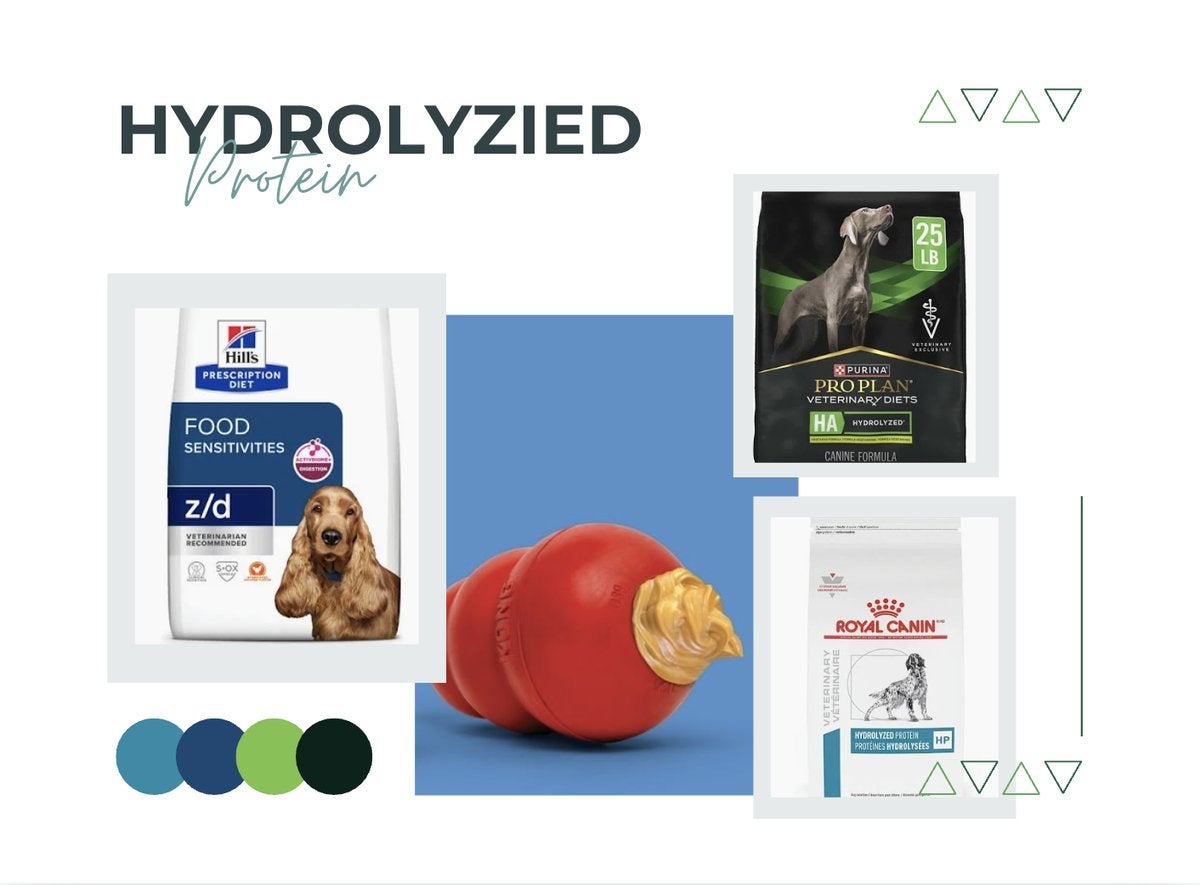
A food trial is a controlled way to determine if your pet has a food allergy.
For 8–12 weeks, your pet eats:
- A prescription hydrolyzed or novel protein diet
- Nothing else
- No treats
- No flavored medications (it’s good to remind your vet to avoid accidental diet trial complications)
- No table food (remind your guests)
Consistency is what makes the trial accurate, but that does not mean it has to be boring.
Easy Ways to Make a Food Trial More Enjoyable
🦴 Turn Meals Into Enrichment
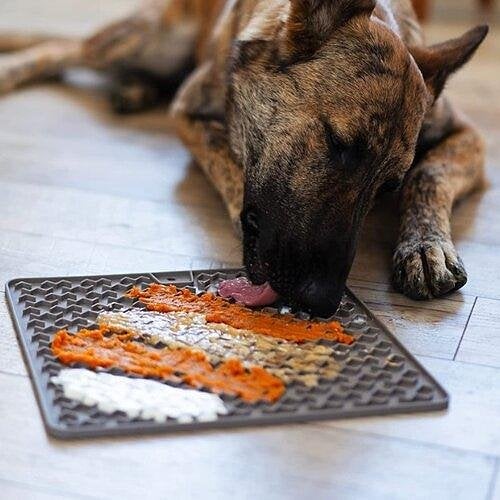
Instead of feeding from a bowl, use your pet’s food as enrichment:
- Stuff meals into a Kong
- Spread softened food onto lick mats
- Use puzzle feeders to make meals interactive
This adds mental stimulation and helps your pet feel more satisfied.
Make It More Appealing
Some pets are hesitant when switching diets. You can safely improve palatability while staying within the trial guidelines:
- Add warm water to kibble to create a soft, gravy-like texture
- Blend kibble with water to make a paste for stuffing toys
- Use the canned version of the prescription diet for variety
You can also talk to your veterinarian about:
- Adding a small amount of plain pumpkin (discuss with your veterinarian if this is appropriate for your pup)
- Warming food slightly to enhance smell and flavor
Freeze It for Longer Lasting Treats
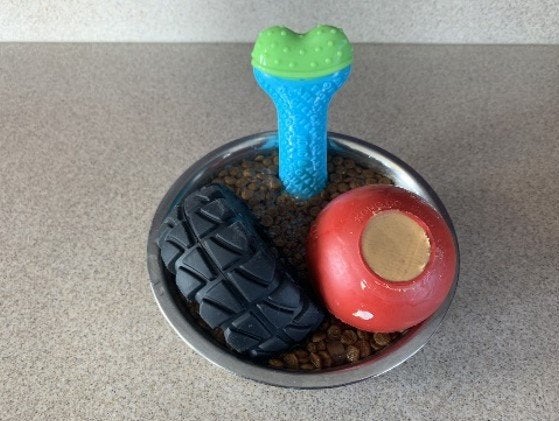
Freezing food makes it last longer and adds another layer of enrichment:
- Freeze stuffed Kongs or lick mats
- Create “food pops” using approved diet only
- Great for busy times or when your pet needs distraction
Replace Treats With Their Diet
One of the hardest parts of a food trial is giving up treats.
Instead:
- Use their kibble as training rewards
- Set aside part of their daily portion for treat time
- Make “treats” by baking or shaping their prescription food (ask your vet for guidance)
This keeps the trial intact while still reinforcing positive behavior.
For Our Feline Friends
Cats can be especially sensitive to food changes.
Helpful tips:
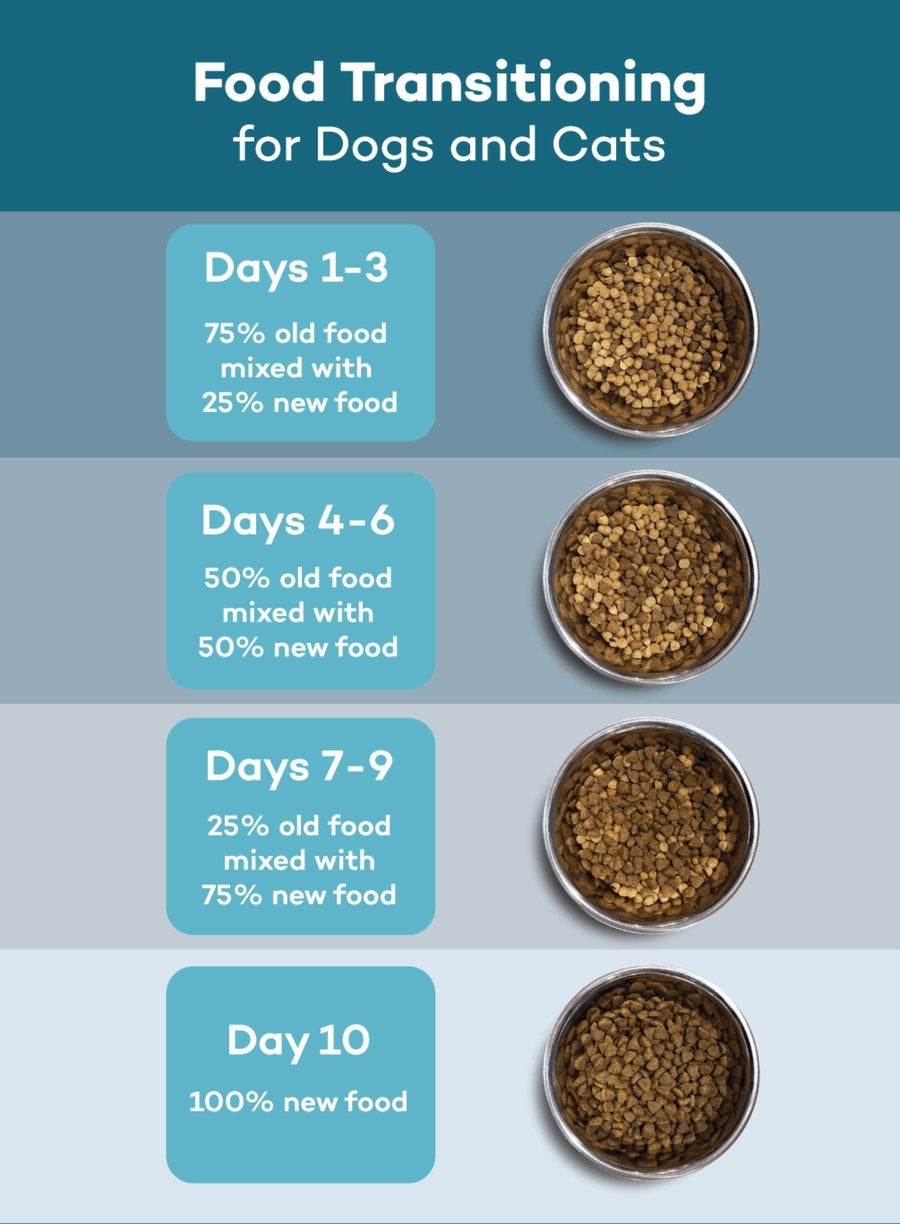
- Transition gradually (if your vet allows)
- Offer food in a quiet, low-stress environment
- Try different textures (pâté vs. loaf vs. softened kibble)
- Warm slightly to enhance aroma
Consistency is key, but patience is just as important.
What to Avoid During a Food Trial
Even small exposures can interfere with results.
Avoid:
- Table scraps
- Flavored medications
- Dental chews or supplements (unless approved by your vet)
- Access to other pets’ food
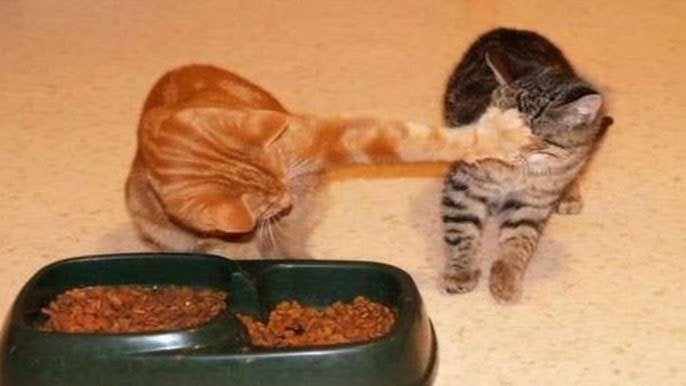
If you’re unsure about something, always check first. It is better to ask than accidentally restart the process.
Parting Thoughts
A food trial is one of the most valuable tools we have for identifying food allergies, but it only works if it is done consistently. The goal is not just compliance, but making the experience positive for your pet. With a little creativity, mealtime can become something they look forward to, not something they feel restricted by.
If you ever run into challenges, we are here to help adjust the plan and find solutions that work for both you and your pet.
Because they deserve it all.